
Custom Military Patches
You aren’t here for stickers. You need gear that survives deployment. Whether you are a Supply Officer at North Island or a unit commander at Miramar, you know the standard. We follow strict Institute of Heraldry specs. We use high-tensile polyester threads that resist UV fading and water-soluble stabilizers that wash out clean. No loose ends. No fraying borders. Just solid, regulation-compliant insignia.
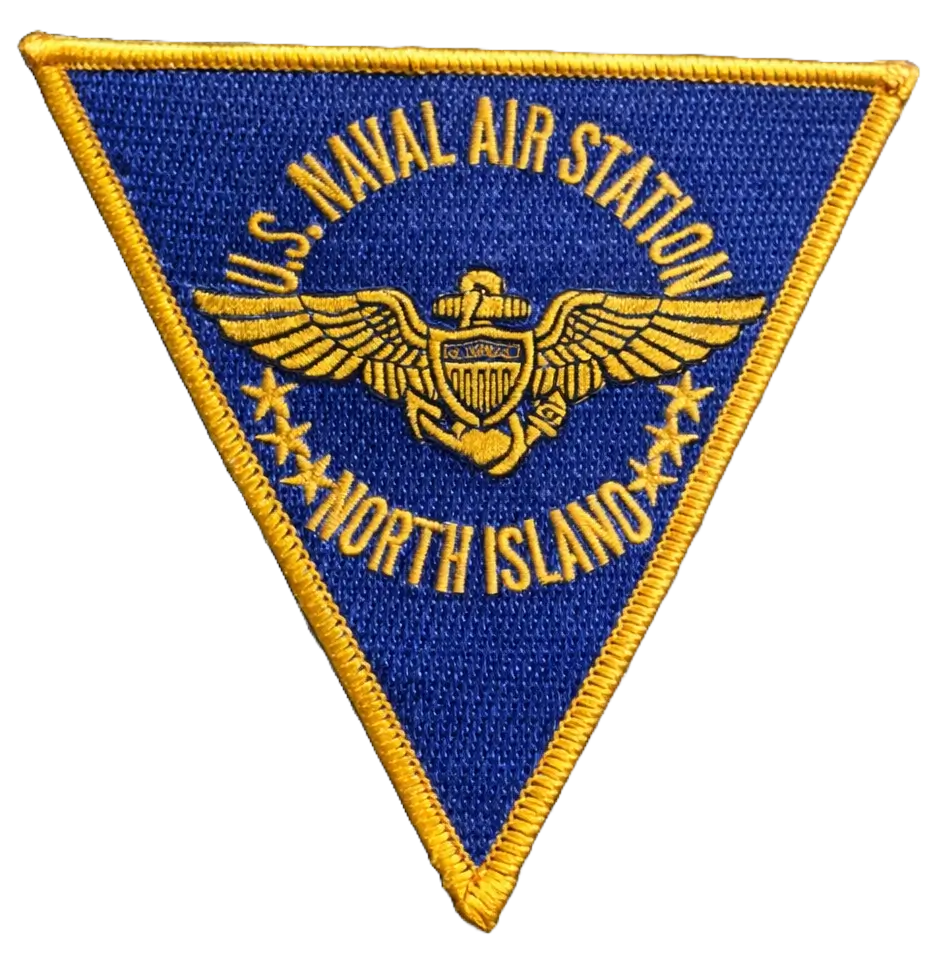
Select Your Branch: Regulation-Ready Patches
Different branches have different “hand-feels” and visual requirements. We don’t mix them up.
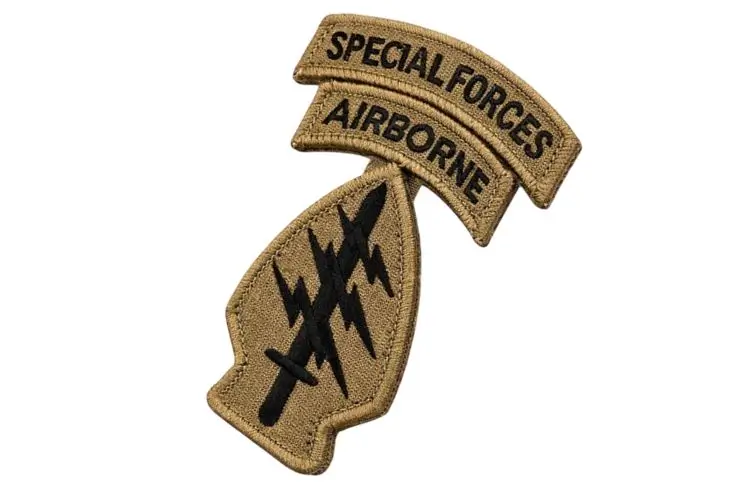
Army & ACU Patches (US Army)
The OCP (Operational Camouflage Pattern) uniform is unforgiving with color matching. If the “Spice Brown” thread is one shade off, your First Sergeant will let you know. We stock the exact thread codes to match official Bagilla and Scorpion W2 patterns. We reinforce the backing so the patch sits flat on the shoulder pocket velcro without curling at the corners.
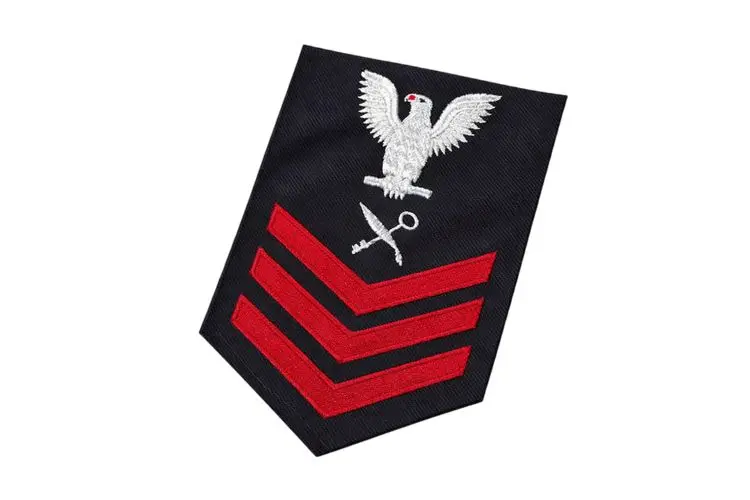
Navy & Marine Corps Insignia (US Navy / USMC)
I see two distinct needs here in San Diego.
Dress Uniforms: For Dress Blues or Whites, we use high-sheen rayon or metallic gold threads. It looks sharp, almost like jewelry.
Tactical/NWU: For the Type III working uniforms, we switch to matte polyester. It absorbs light rather than reflecting it. Essential for field ops.
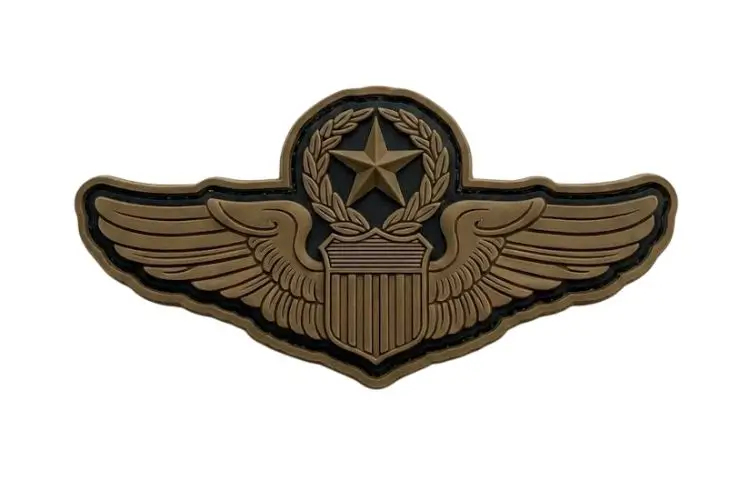
Air Force & Space Force Wings (US Air Force)
Pilots love the 3D look. We do a lot of “Flight Suit” patches using PVC (rubber) because it gives depth to the wings and propellers that embroidery just can’t match. It wipes clean after a flight and doesn’t snag on cockpit switches.
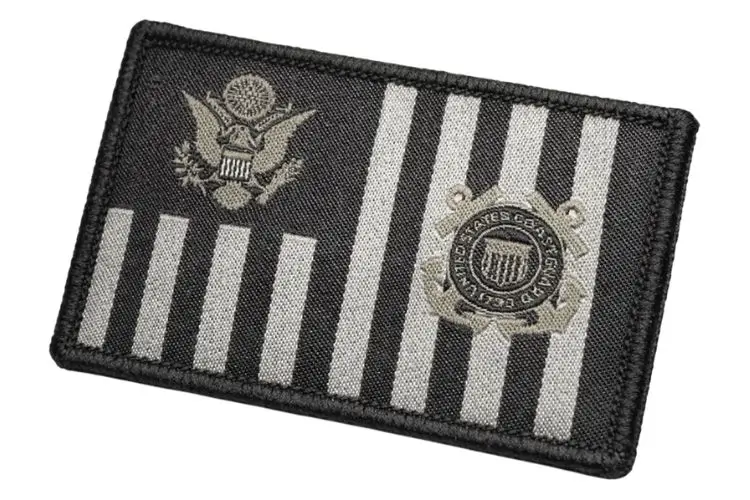
Coast Guard & Specialized Units (USCG)
Saltwater destroys cotton thread. It rots it. For our USCG crews and the Underwater Egress Training Division, we use 100% synthetic materials that are hydrophobic. The water sheds right off.
Patch Material Guide: PVC vs. Embroidered vs. Woven
Customers ask me daily: “Gabriel, which one lasts longer?” Here is the technical breakdown.
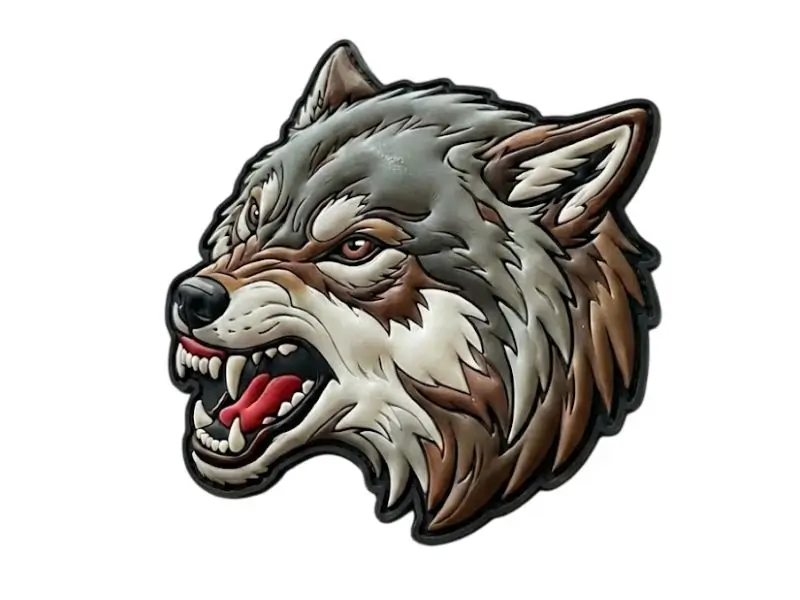
PVC & Rubber Patches (The Tactical Standard)
This is the tough stuff. PVC (Polyvinyl Chloride) is a soft, rubber-like material.
- The Feel: Flexible, waterproof, mud-proof.
- The Tech: We inject liquid rubber into a metal mold.
- The “Gotcha”: There is a Mold Fee (usually $50 – $100). You pay this once to cut the metal tool. Re-orders are cheaper because the tool is already on the shelf. If you are crawling through mud or salt spray, buy PVC. It doesn’t fray.
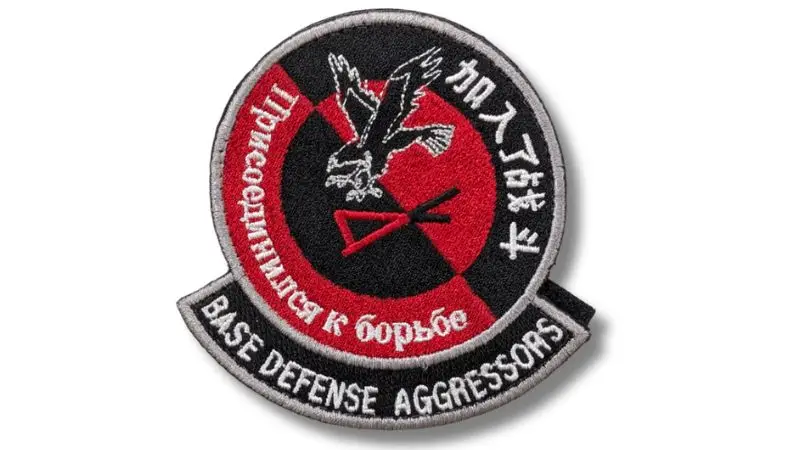
Embroidered Patches (Traditional & Class A)
This is what people think of when they hear “patch.”
- The Feel: Textured, raised threads on a stiff twill backing.
- The Use Case: Class A uniforms, dress jackets, and traditional unit rockers.
- The Look: Classic. We use a “Merrowed” border—that thick, overlock stitch around the edge—to seal the fabric layers.
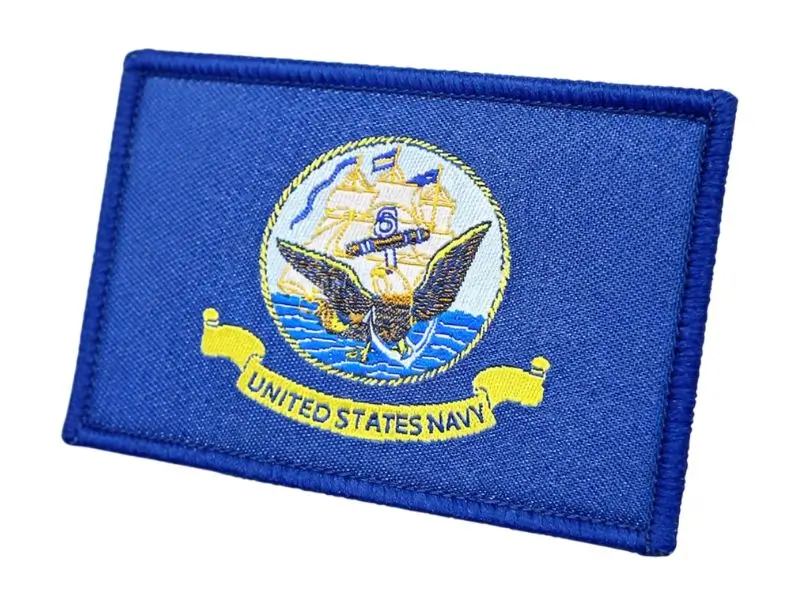
Woven Patches & IR Flags
The resolution is much higher.
- The Feel: Smooth, flat, tight weave.
- The Tech: Made on a loom (like a clothing label), not an embroidery machine.
- The Use Case: Infrared (IR) identification tags and designs with tiny text. If your unit crest has small lettering that looks like a blob on an embroidered patch, switch to woven.
The “San Diego Sun” Warning
“Listen, the sun hits different here. If you leave a standard patch on a dashboard at Camp Pendleton for a month, cheap cotton thread will bleach out. We only use Solution-Dyed Polyester. The color is locked into the fiber molecule, not just dipped on the surface. Your blacks stay black and your OD Greens won’t turn yellow.”
Attachment & Backing: Ensuring Uniform Compliance
The backing is just as important as the front. If it peels off in the field, it’s trash.
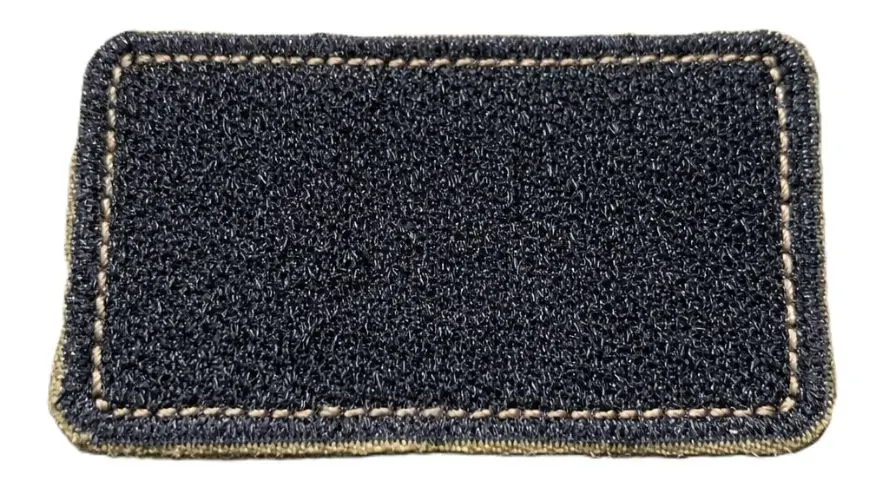
Hook and Loop (Velcro) for Tactical Gear
Standard issue for plate carriers and helmets.
- The Build: We sew the “Hook” side (the scratchy male side) directly onto the back of the patch. We stitch it through the border so it doesn’t separate.
- The Bonus: We always include the matching “Loop” side (the soft female side) in the bag. If your gear doesn’t have a panel, you can sew that piece on.
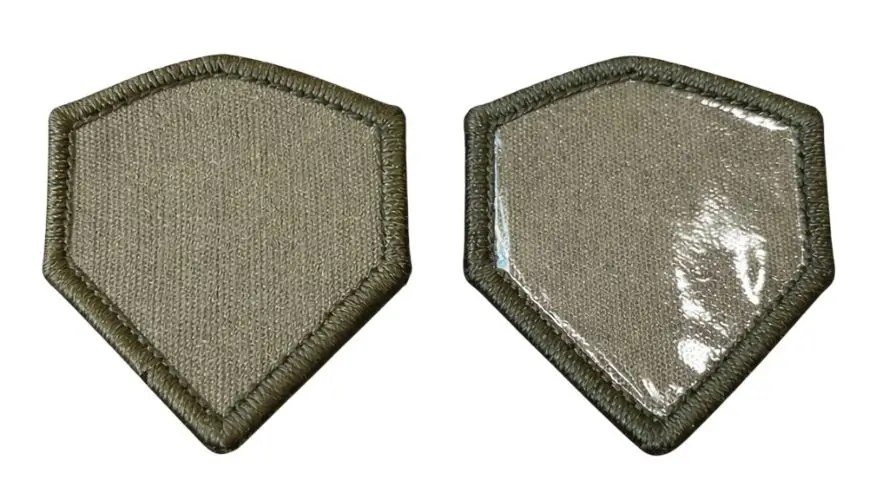
Iron-On vs. Sew-On (Permanent Application)
Permanent mounting options.
- Iron-On: Fast and clean. Good for morale patches on backpacks. But heat seal adhesive softens in high heat (like a dryer or a desert deployment).
- Sew-On: The only real choice for “Class A” uniforms. It’s permanent. It sits flatter. It looks professional. If you are active duty, needle and thread is the way to go.
Quick Comparison Table
| Feature | PVC (Rubber) | Embroidered | Woven |
|---|---|---|---|
| Durability | Extreme (Waterproof) | High | Medium |
| Detail Level | 3D / Chunky | Classic Texture | High Res (Tiny Text) |
| Best For | Field Gear / Mud | Class A Uniforms | IR Flags / Caps |
| Avg. Lifespan | 5+ Years | 3-5 Years | 2-4 Years |
Beyond the Uniform: Morale, K9, and Airsoft
We don’t just do regulation specs. We handle the gear that builds unit culture.
Morale & Special Unit Patches
These are the “inside jokes” of the platoon. Whether it’s a funny graphic for the Friday night meetup or a specific unit logo that isn’t regulation, we make it. PVC is huge here—we can do 3D sculpting that makes the design pop off the velcro.
K9 & Service Gear Identification
Working dogs need clear ID. We make large “POLICE,” “SHERIFF,” or “SERVICE DOG” rockers.
- Visibility: We use high-contrast thread colors (White on Black, Yellow on Navy) so the text is readable from 20 yards out.
- Durability: These patches get dragged through brush and dirt. We use a tighter weave to prevent snagging.
Underwater & Survival Training Badges
For the guys passing Underwater Egress Training or heavy survival schools. These are badges of honor. We recommend PVC for these because they are often exposed to water. Cloth patches stay wet; rubber wipes dry instantly.
Ordering Custom Military Patches (Step-by-Step)
You have a deadline. We have a schedule. Here is how we get it done.
-
01
Send Your Art
Email us the unit crest or the napkin sketch.
-
02
Digitizing
We don’t just “print” it. A human digitizer plots the needle path. We convert your image into a stitch file.
-
03
Sample Approval
Crucial Step. We send you a photo (or a physical sample) of the first patch off the line. This is where you check the Camouflage colors against your uniform.
-
04
Production & Shipping
Once you say “Go,” we run the machines. We ship out fast to meet deployment dates.
Frequently Asked Questions
Are PVC patches allowed on Army uniforms?
Strictly speaking, for the ACU/OCP uniform, regulation usually calls for embroidered insignia. However, PVC is the standard for gear—backpacks, plate carriers, and tactical hats. Many units also allow PVC for “Morale Fridays” or sleeve patches in the field. Check your specific unit SOP.
What is the standard size for a US Flag shoulder patch?
2.25″ x 3.5″. This is the standard regulation size for the reverse flag worn on the right shoulder. We have the exact die-cut templates for this.
How do I clean my custom patches?
PVC/Rubber: Scrub with warm soapy water and a soft brush. Air dries instantly.
Embroidered: Hand wash with cold water. Never use hot water or a dryer, as high heat melts iron-on glue and warps the backing.
Can civilians legally wear military patches?
Yes, as long as you don’t commit Stolen Valor (wearing unearned rank/medals for profit or deception). Avoid wearing “Tabs” (like Ranger or Special Forces) out of respect.
My Velcro patch is slipping. Is it defective?
Likely not. The “Loop” side (the fuzzy part on your uniform) usually wears out before the “Hook” side on the patch. Try replacing the loop panel on your gear first.
What is the best thread for sewing patches on?
Use Bonded Nylon or 100% Polyester. Do not use cotton thread—it rots in the sun and snaps under tension.
What is the difference between “Unit” and “Morale” patches?
Unit Patch: Official, regulation-compliant insignia authorized by the Institute of Heraldry.
Morale Patch: Unofficial, often humorous designs (e.g., “Baby Yoda”). Allowed on backpacks or during “Morale Fridays” but not on official duty uniforms.
How long does production take?
Standard orders take 2–3 weeks (includes digitizing and production). Rush orders can often be done in 10–12 days.
Why do I have to pay a “Mold Fee” for PVC?
PVC requires a physical metal mold to cast the liquid rubber. This is a one-time fee. We store your mold, so you won’t pay it again on re-orders.
Do you ship to APO/FPO addresses?
Yes. We ship to bases all over the world. Just give us the correct Unit, Box, and APO zip code. We know how the military mail system works; we’ll get it there.