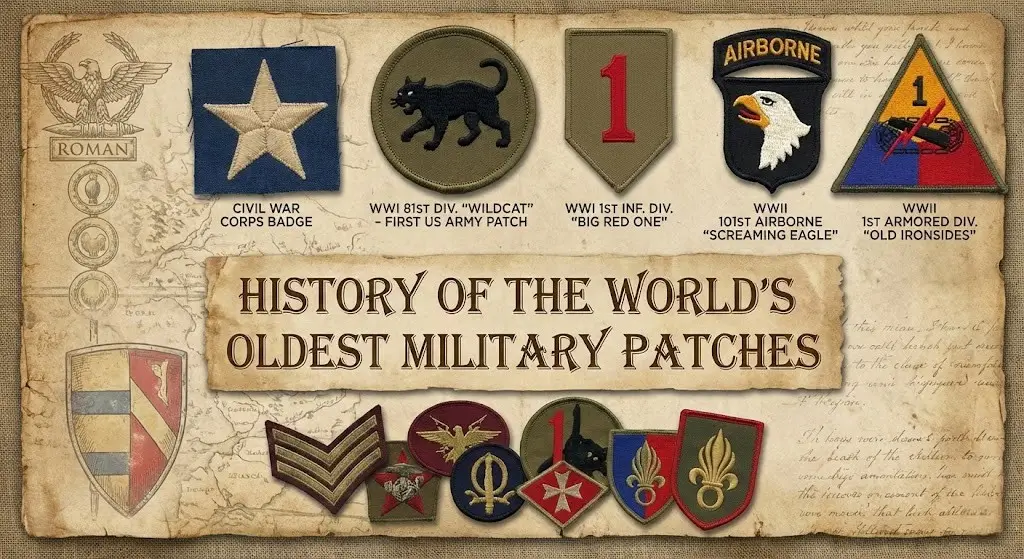
The History of the World’s Oldest Military Patches and Embroidered Insignia
The first official U.S. military patch belonged to the 88th Infantry Division in 1918… Today, at Custom Patches San Diego, we manufacture the modern custom military patches that evolved from this legacy. They were known as the “Blue Devils.” But the engineering behind unit identification goes back a thousand years. We are not just looking at history today. We are looking at the evolution of materials. The industry went from hand-stitched wool to CNC-milled tactical rubber. Here is how the manufacturing changed.
The Ancient Roots: 1066 and the Bayeux Tapestry
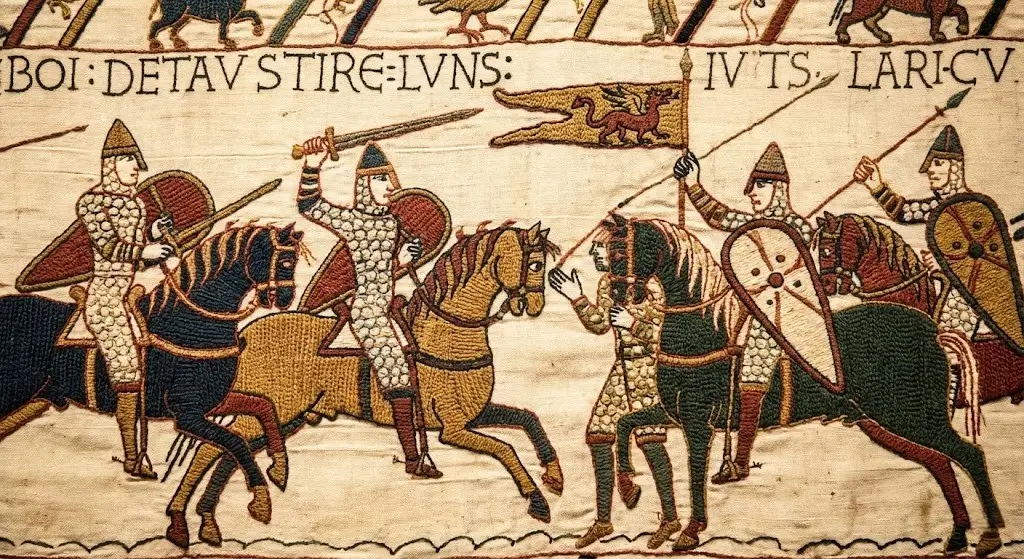
The grandfather of the modern morale patch is the Bayeux Tapestry from the year 1066. This is the earliest famous example of “narrative embroidery.”
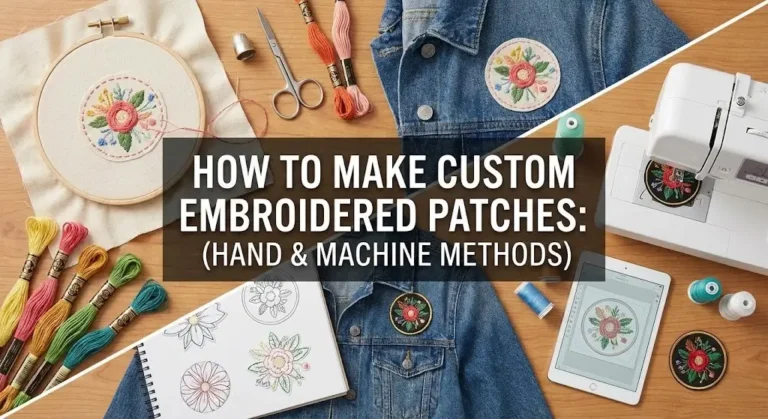
They hand-stitched colored wool onto a linen base. The goal was simple. Identify factions like the Normans versus the Saxons and tell a story of conquest. The core concept of using colored thread on a base fabric to identify who is on your side has not changed in a thousand years. Only the machinery has.
WWI and the First Official SSI (1918)
World War I trench warfare was chaos. Commanders needed to identify troops instantly through the mud and smoke.
The Metal Problem: Before 1918, soldiers used metal pins for identification. Metal snags on heavy gear. Worse, metal glints in the sun and becomes an immediate sniper hazard.
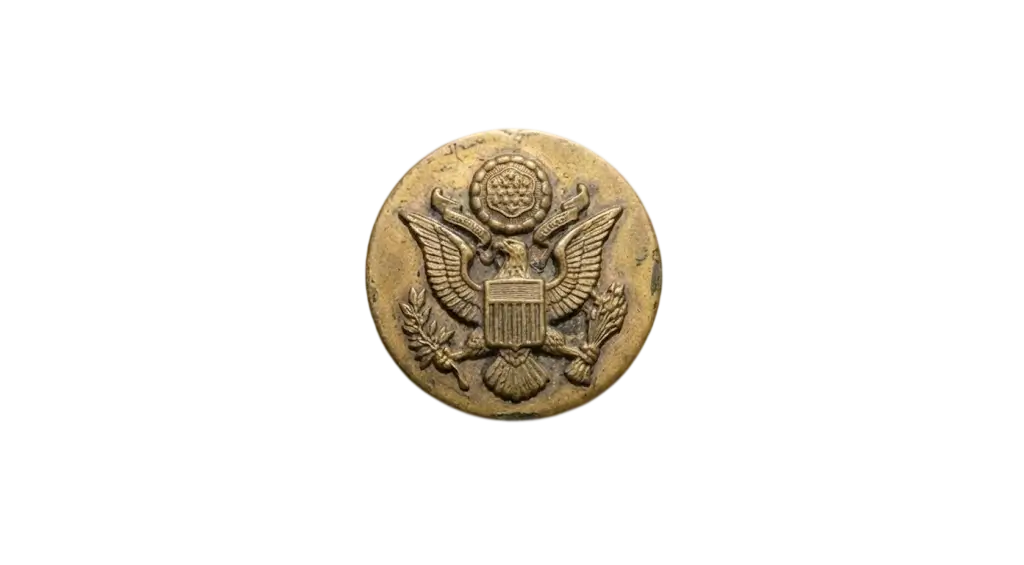
The Fabric Solution: The military created the Shoulder Sleeve Insignia (SSI). The 88th Infantry Division was the first to wear an official SSI in combat.
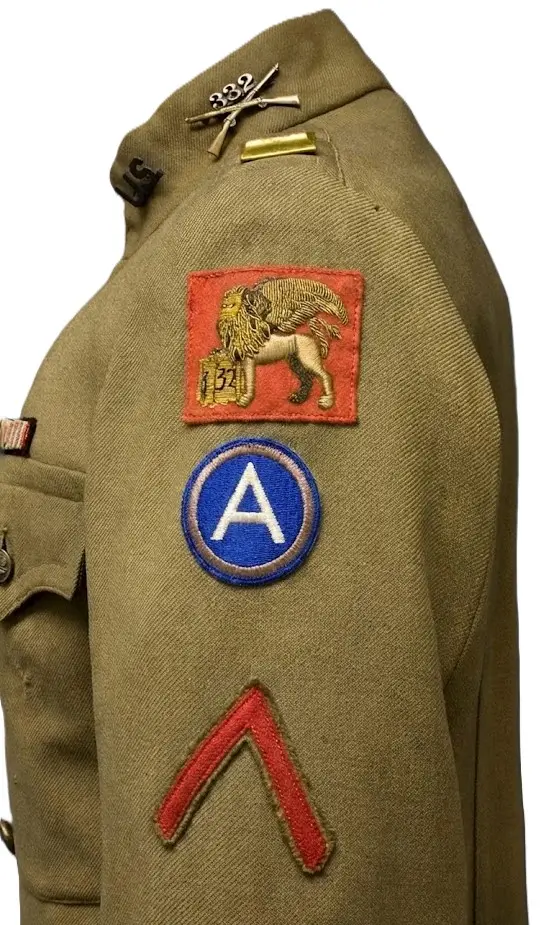
Back then, the factories used raw felt and wool. They did not have the heavy “merrowed” borders we use today to overlock the edges and stop the fabric from fraying. They just cut the felt with shears and sewed it straight to the uniform. It was crude, but it worked. Today, we use advanced manufacturing capabilities like merrowing and laser-cutting to prevent that fraying.
WWII to Vietnam: The Golden Age of Machine Embroidery
World War II brought an explosion of unit pride. Fighter squadrons and bomber crews started creating custom, irreverent designs to stick on their leather flight jackets. This era also popularized the felt varsity letter look we see in vintage apparel today.
The Late 20th Century: The Birth of the Tactical PVC Patch
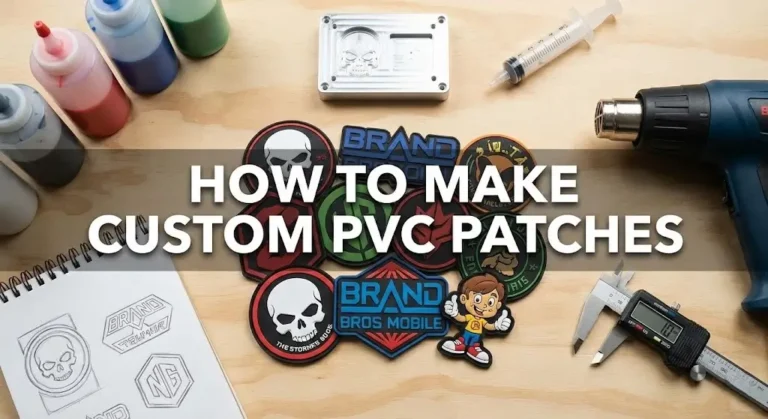
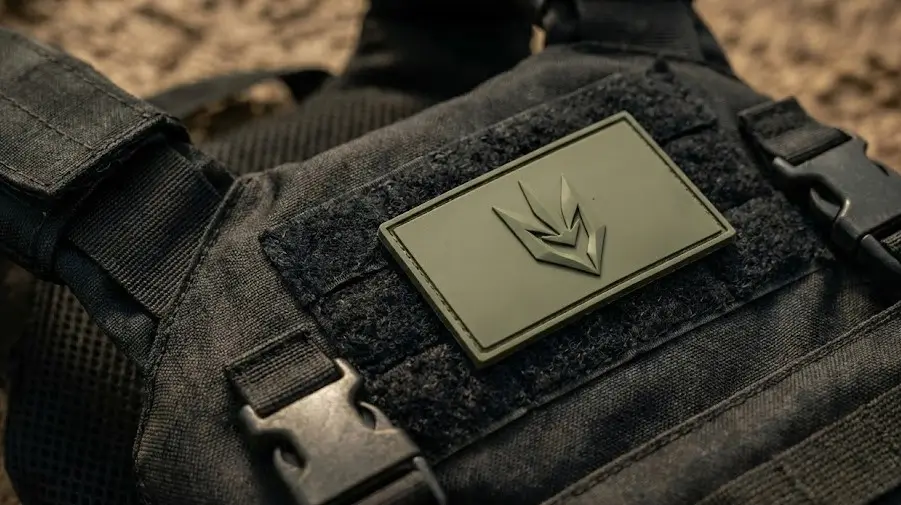
Thread has physical limits. By the late 1980s and 90s, Special Forces operating on the water needed something tougher… Enter the PVC patch. We use a precise process of micro-injection molding to ensure these survive the Pacific surf. Think about the Navy SEAL teams training right across the bridge in Coronado. If you dunk a traditional embroidered patch in the Pacific, it holds saltwater, absorbs mud, and the threads fray the second you rip it off a heavy-duty Velcro plate carrier. The military needed a tactical upgrade.
Factory Insight: Why We Don’t Make Them Like We Used To
People love to say things were built better in the old days. That is not true for patches.
Back in 1918, factories used vegetable-dyed wool. If you wore that in the field, the UV light bleached it out in a matter of weeks. Today, we stitch everything using solution-dyed polyester thread. We don’t just paint the outside of the thread; the color is locked directly into the plastic molecule itself. You can leave one of our 2026 patches on a dashboard, baking in the San Diego sun and soaking up the salty marine layer for a year, and it will not lose a single shade of color.
The “Rookie Mistake” in Vintage Patch Reproduction
I see this mistake at the front counter every week. A historical reenactment group or a museum curator comes in asking for an “authentic WWI or WWII style” patch. Then, they hand me a perfect, computer-generated vector file (which usually avoids the setup fees of low-res art) and expect flawless results, high-density satin stitch border. You cannot have both.
Outfitting the Modern Fleet
From crude 1918 wool cut with hand shears to 2026 tactical PVC poured into metal molds, the core mission of the patch remains exactly the same: identify your crew and unify the unit. We just have better tools to manufacture them now.
At Custom Patches San Diego, we run modern multi-head Barudan machines and precision CNC mills to build regulation-ready gear for today’s operators.
Need regulation or morale patches for your unit? Send us your art for a free digital proof.Our Commitment to the Future & The Past
As we preserve the history of insignia, we also support those making history today. We offer a permanent military and veteran discount for all San Diego-based units. Furthermore, to support students researching the future of manufacturing and design, we host an academic scholarship program.